


When a stopper separates from its top during opening, the product’s quality image can be damaged in seconds. An experienced manufacturer manages this risk from the design stage through compatible materials, precise bonding and rigorous quality control.
Why can the top become detached?
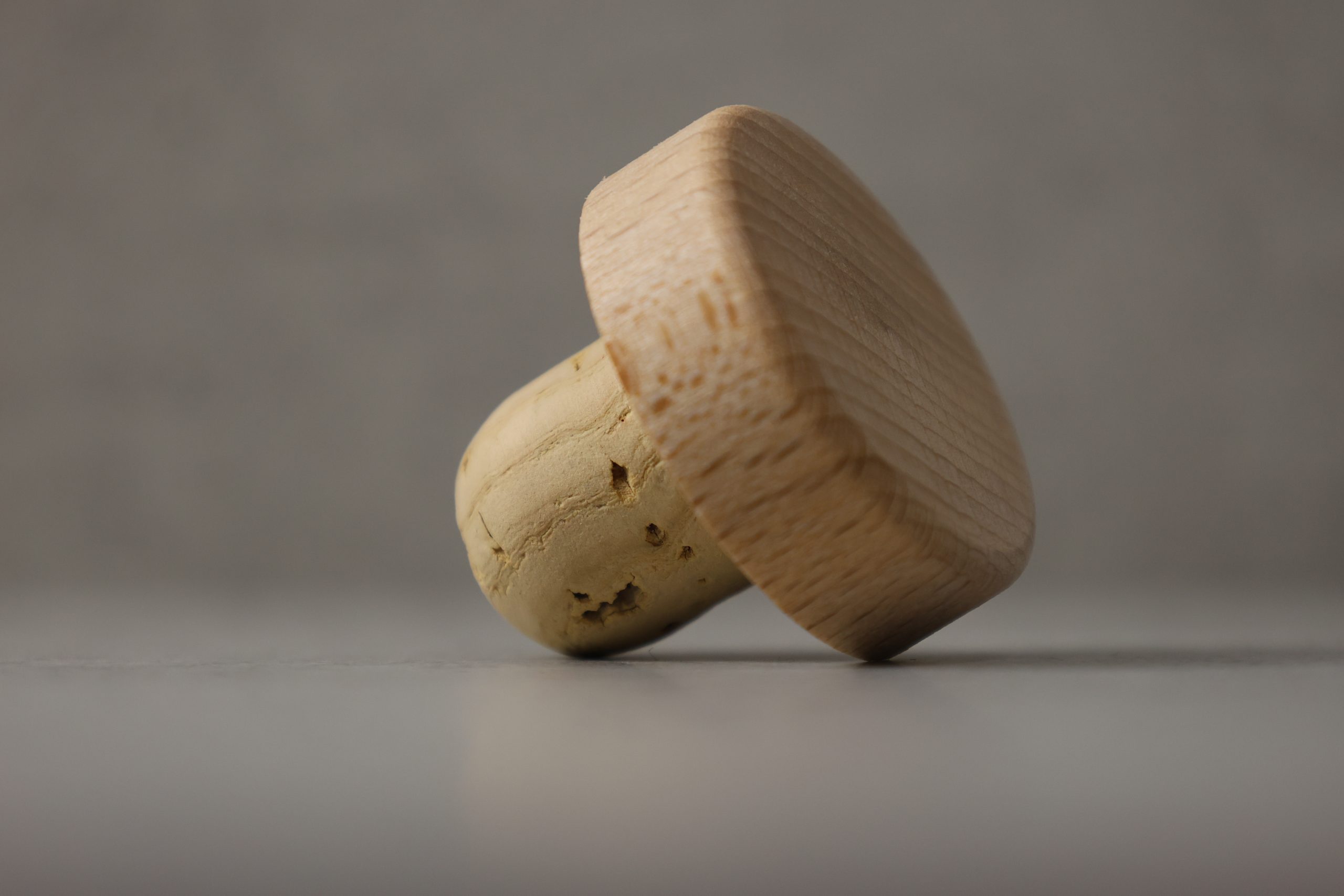
A bar top closure combines two components with very different properties: a natural, compressible cork shank and a head made from wood, metal, glass, ceramic or plastic.
Their joint withstands pulling and twisting every time the bottle is opened. The extraction force required to remove a cork can range from 15 to 45 daN (150–450 N), depending on industry specifications, placing significant stress on the bond between the head and the body. Separation can occur if the industrial adhesive is unsuitable for the materials, the surfaces contain dust or residues, application is inconsistent or the bond has not yet reached full strength.
Prevention therefore begins with the correct technical specification of every component – not simply with a supposedly “strong” glue.
Material compatibility makes the difference
There is no universal bonding solution. An adhesive that performs well on unfinished wood may behave differently on varnished, metallic or particularly smooth surfaces.
A qualified manufacturer validates the complete combination: cork type, head material, finish, contact area and beverage. Bonding surfaces must also be clean, dry and consistently prepared.
For spirits, resistance to alcohol is essential. The International Code of Cork Stopper Manufacturing Practices, version 7.1 requires adhesives for headed stoppers to be suitable for beverages above 20% ABV, or for the actual alcoholic strength of the product.
Process control creates consistency
Adhesive performance depends on how it is applied. Dosage, coverage, assembly pressure, component alignment and the time required to reach final strength must all follow defined parameters.
Too little adhesive may leave unbonded areas. Too much can create an uneven layer or interfere with assembly. A surface that feels dry may also not have achieved its full mechanical strength.
Leading manufacturers therefore combine well-adjusted equipment with process monitoring, maintenance and batch traceability. This discipline turns a bonding operation into a repeatable outcome.
Validation starts with the customer’s packaging
Brands often have their bottle in place before selecting a stopper. The manufacturer’s role is not to challenge that decision, but to engineer the right closure for the chosen packaging.
Using a physical sample or technical drawing, the cork shank diameter, insertion depth and other relevant characteristics can be defined to deliver a smooth, consistent opening. This tailored approach protects the assembly while respecting the project’s existing design and requirements.
Visual controls then verify alignment and finish. Mechanical pull or torque tests confirm the integrity of the bond between the head and cork shank. The goal is straightforward: the closure should remain intact throughout transport, storage and use.
Quality consumers can feel
A premium stopper is defined by more than appearance. It should provide a comfortable grip, controlled opening and a sense of robustness that supports the brand’s positioning.
That reliability comes from practical expertise: selecting suitable materials, controlling the bonding operation, respecting production times and validating the finished solution. Together, these measures reduce the risk of separation and protect the consumer experience.
Looking for a reliable, distinctive bar top stopper that reflects the quality of your brand? Share your project with us. We develop high-quality solutions tailored to your technical, aesthetic and functional requirements.

