


The international high-end packaging market—and more specifically cork closures for spirits—is undergoing a profound transformation. Observations from the Canadian, British, and Asian markets highlight strong trends that are now shaping the strategies of European spirits houses.
For a cork closure manufacturer such as Portuliège & J.A. Beira, these developments reinforce a clear conviction: the future of premium closures lies in the combination of technical performance, customization, and sustainability.
Distilleries producing whisky, cognac, gin, rum, or eaux-de-vie are seeking high-end closure solutions that meet regulatory requirements, consumer expectations, and the cultural specificities of each market.
Traceability: a global requirement for cork closures
Material traceability has become a non-negotiable criterion. North American markets—particularly Canada—have strengthened their requirements regarding raw material transparency and the origin of cork and wood components.
For cork closure manufacturers, this involves:
– strict supplier selection,
– systematic certification (FSC-certified cork, French wood tops),
– comprehensive technical documentation,
– full control of the supply chain.
Distilleries now expect clear information on the origin, transformation process, and guarantees associated with each spirits closure. This demand is reshaping R&D priorities toward fully traceable, eco-responsible cork solutions.
Sustainability: a reinforced expectation in premium closures
British and Asian markets are seeing accelerated demand for sustainable closure solutions. Brands aim to reduce their environmental footprint while maintaining the quality and aesthetics expected from high-end bar-top closures.
Key trends include:
– the use of 100% natural or bio-sourced cork,
– the integration of French wood from sustainably managed forests,
– the reuse of cork offcuts and granules in technical cork production,
– research into more responsible adhesives and assembly processes.
These developments confirm cork’s strategic role as a material of the future—lightweight, renewable, recyclable, and naturally suited to premium customized closures for spirits.
Cultural customization: a strategic driver in international packaging
Each market adapts packaging aesthetics to its cultural identity, making closure design a key differentiation factor.
– In the United Kingdom, darker tops and metallic finishes are increasingly popular.
– In Canada, laser-engraved closures and lighter woods reflect premium craft codes.
– In Asia, luxury is expressed through refined markings, deep tones, and highly symbolic finishes.
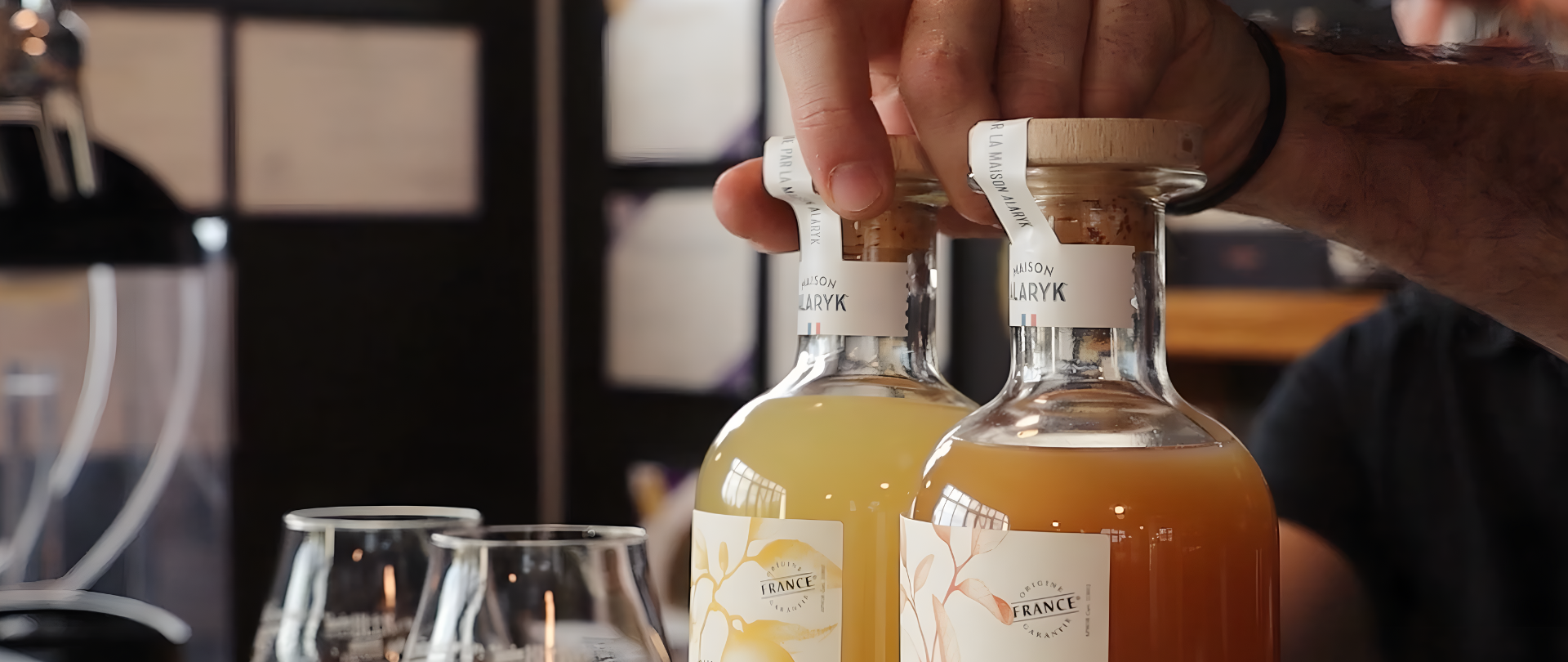
For cork closure manufacturers, this evolution requires advanced customization capabilities: material selection, colors, textures, engraving, and seamless coherence between closure, bottle, and label.
Towards universally sustainable premium closures
These three trends—traceability, sustainability, and customization—converge toward one certainty: the premium closure of tomorrow will be certified, traceable, market-adapted, and designed to last.
Today’s solutions must address global challenges while respecting the technical specificities of each spirit.
P&J is fully aligned with this vision, offering responsible, high-end, and customized closure solutions for distilleries worldwide.

